

While Qatari officials are anticipating their role as hosts of the World Cup in 2022, there has been much talk lately about how the rules of the game need to be revamped.
Football has changed significantly over the past several decades, as evidenced in the physiological characteristics of the players. Today’s players are taller, faster, stronger and more powerful than their predecessors. They have an overall higher physiological capacity and thus the ability to cover more ground in less time.
However, the dimensions of the pitch have not changed to compensate for the physiological changes. Consequently, the field became congested. It offers less space for stars like Diego Maradona or Zinedine Zidane to leave their mark as they did in years past.
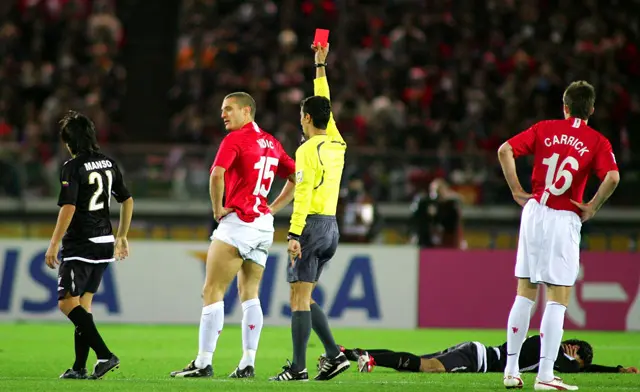
The rules of the game have not evolved alongside these physiological changes. No rules have been passed to create more space or open up the pitch and make the game more offensive in nature. When a player is sent off with a red card, the game completely changes. Suddenly, space is brought back to the game. Players are able to use their innate talent and ability to really demonstrate their skills.
Every sport evolves with time: technically, tactically and physically. There are many ideas that the Fédération Internationale de Football Association (FIFA) could look into in order to redress some of the problems confronting the sport. The fact that FIFA has done so little so far to remedy the situation, or at least promote a thorough examination of the rules of the game, is simply inexcusable.
Below I present a series of straightforward suggestions that could revitalize the sport in a way that would allow us once again to call it the beautiful game.
Currently, the match clock does not stop when a player is injured, or for any other reason, and time is added on at the end of a match. In my new system of rules, the countdown timing device would be visible for all to see and the game clock would stop when a foul occurs, when a player is injured, or when a corner kick or a free throw is given. Rather than two 45-minute halves, the game would have two 35-minute halves with no extra injury time.
Readjusting the time of each half would be necessary, since stoppage within the construct of two 45-minute halves would be too onerous.
Currently, the main referee inside the pitch is supported by only two linesmen. Placing additional referees on the field – one on each half of the pitch and behind each goal watching the activity inside the penalty box – would address many of the issues related to missed calls. FIFA is discussing adding referees to the mix.
Players diving in theater-like fashion inside the penalty box in an effort to confuse referees into awarding them a penalty kick should be immediately red-carded and suspended for two matches. Consequently, the team committing such an offense inside the penalty box would be required to play with a man down for the rest of the match and would also be subject to a penalty kick. Furthermore, diving in other sections of the field would result in immediate expulsion from the match.
Reforms to this rule would include the creation of a newly demarcated attacking zone at both ends of the field. A dotted line would be drawn in between the midfield line and the top of the penalty box. The offside region (attacking zone) would be the space in between the goal line and the newly created dotted line. Limiting the offside area would create more open space in the field of play and potentially lead to more goals being scored.
A different system in which a certain number of accumulated team fouls would lead to a given player being sent off for an extended amount of time is worth consideration. For example, every time a team commits five fouls they would be punished by the removal of one player off the field for 10 minutes and be forced to defend a penalty kick.
The use of instant replay has been debated during the last several years. It is one that has to be approached with much caution and deliberation, since making use of it would fundamentally destroy the philosophical essence of the beautiful game.
Daily living and football play are characterized by a continuous stream of potentially fateful events that cannot be turned. To disrupt this essential philosophical dynamic of the game is unnatural, nonhuman and defies the notion of predetermination. It’s a recourse that we do not have in life, and we should not have in match play.
A football match draws on competing themes such as justice, injustice, victory, defeat, happiness, sadness, tragedy and exhilaration. The complexity and drama surrounding such powerful emotional concepts gives the game a mystical and magical aura. The lure and mystery of the unknown is a central element at the core of daily living and of football. The outcome of a game is uncertain, and that constant state of unpredictability is what makes football so dramatic, captivating and the passion of the masses.
It is about time that FIFA takes a closer look at the laws governing the beautiful game. The archaic rules now in force have not evolved as they should have, and the sport has suffered for this. Someone in the upper echelons of the football power structure should heed the call for change and usher the game into a new frontier.
(Ricardo Guerra, an exercise physiologist, has worked with several clubs and teams in the Middle East and Europe, including the Egyptian and Qatari national teams. He can be contacted at rvcgf@yahoo.com.)
Source: https://english.alarabiya.net/articles/2011%2F07%2F07%2F156505


Deixe um comentário